Corporate Office Party Ideas & Games: 2–3 Hour Mystery

Corporate Office Party Ideas: Choose Your PartyKook Mystery Game (2026 Guide)

Corporate Office Party Ideas: Choose Your PartyKook Mystery Game (2026 Guide)

Quick Answer

Pick one anchor activity, mix departments into small teams, send character cards out 48–72 hours ahead, and run a structured 2–3 hour agenda. That combination is what separates the office parties people still mention in March from the ones people left at 7:15.

Search “corporate office party ideas” and you get two kinds of results. The first: advice so vague it’s useless, things like “try a theme” and “serve good food.” The second: elaborate productions involving caterers, photo booths, and budgets no planning committee actually has.

This guide is written for the real situation: a conference room, 10 to 20 people who’ve had a full workday, maybe two hours, and a committee that doesn’t want to spend three weeks planning something people leave early anyway.

Below: the three PartyKook mystery games that work best for corporate groups, a budget breakdown, a complete planning checklist, and a schedule you can hand to your MC on the day.


Why Most Corporate Office Parties Go Sideways

Open mingle is the original sin of office party planning. People show up, grab a drink, find the colleague they already know best, and stand near them for twenty minutes. About a third of your list skipped it for exactly this reason — they knew what it would feel like, and they were right.

After that, the same failures tend to show up: no clear structure means one or two people end up carrying the social energy while everyone else half-participates. Games that put individuals on the spot in front of the whole room get quietly dreaded. Rules explanations that run too long kill whatever momentum built up during arrival. And making alcohol the plan A for social warmth works until you look around and notice how many people it leaves out of the actual party.

None of this is expensive to fix. You need one activity with a goal, small teams that cross departments, timed rounds so there’s always something happening, and a bit of prep work so no one walks in cold.

  • One featured anchor activity that gives the evening a shared direction
  • Teams of 3–5 mixed across departments, so new conversations actually happen
  • Micro-roles on each team: timekeeper, note-taker, clue runner, spokesperson
  • Timed segments with a visible countdown — energy drops when people don’t know how long something will last
  • Character cards sent out 48–72 hours ahead so nobody arrives without knowing their role
  • A real finish: reveal, three mini-awards, group photo
The one change that moves the needle most

Send character briefs a couple of days before the event. Introverts get time to prepare. Extroverts can plan their entrance. The room is actually ready to start when you need it to start, instead of spending the first half hour warming up. Always include a no-questions-asked swap offer in every brief.


Choose Your PartyKook Mystery Game

All three games are print-and-play: download, print, assign roles, and follow the host guide. No props required, no acting experience needed. Pick the one that fits your group size, tone, and theme.
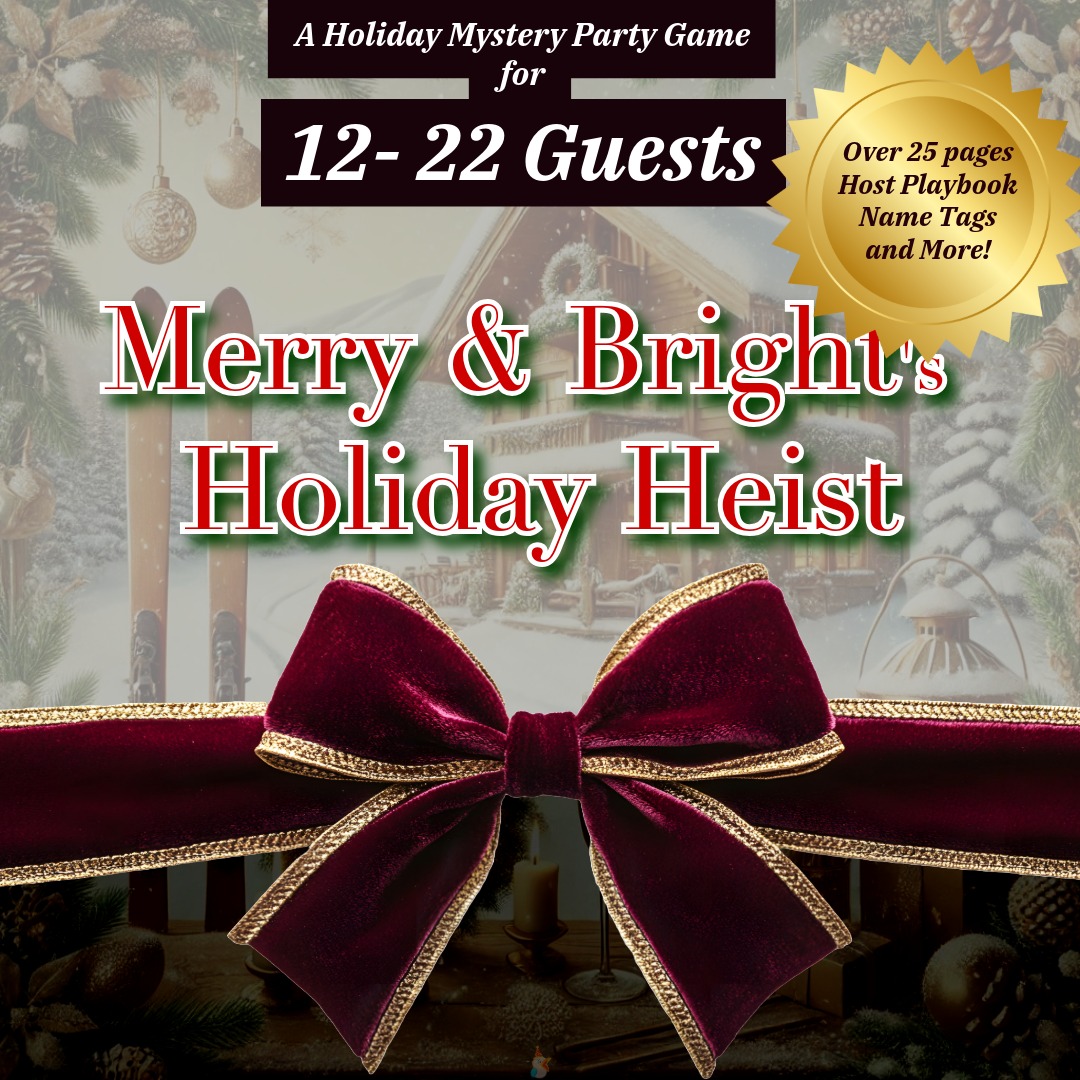
Merry & Bright Holiday Heist Mystery Party Game Kit
Best for Large Holiday Events

Merry & Bright’s Holiday Heist

12–22 players · Ages 14+ · From $20

A holiday whodunit built around the stolen Vanished Jewel. Everyone gets a character with a secret and a clue. Two rounds of mingling and theorizing, then the group votes on a suspect before the reveal.

View Merry & Bright →
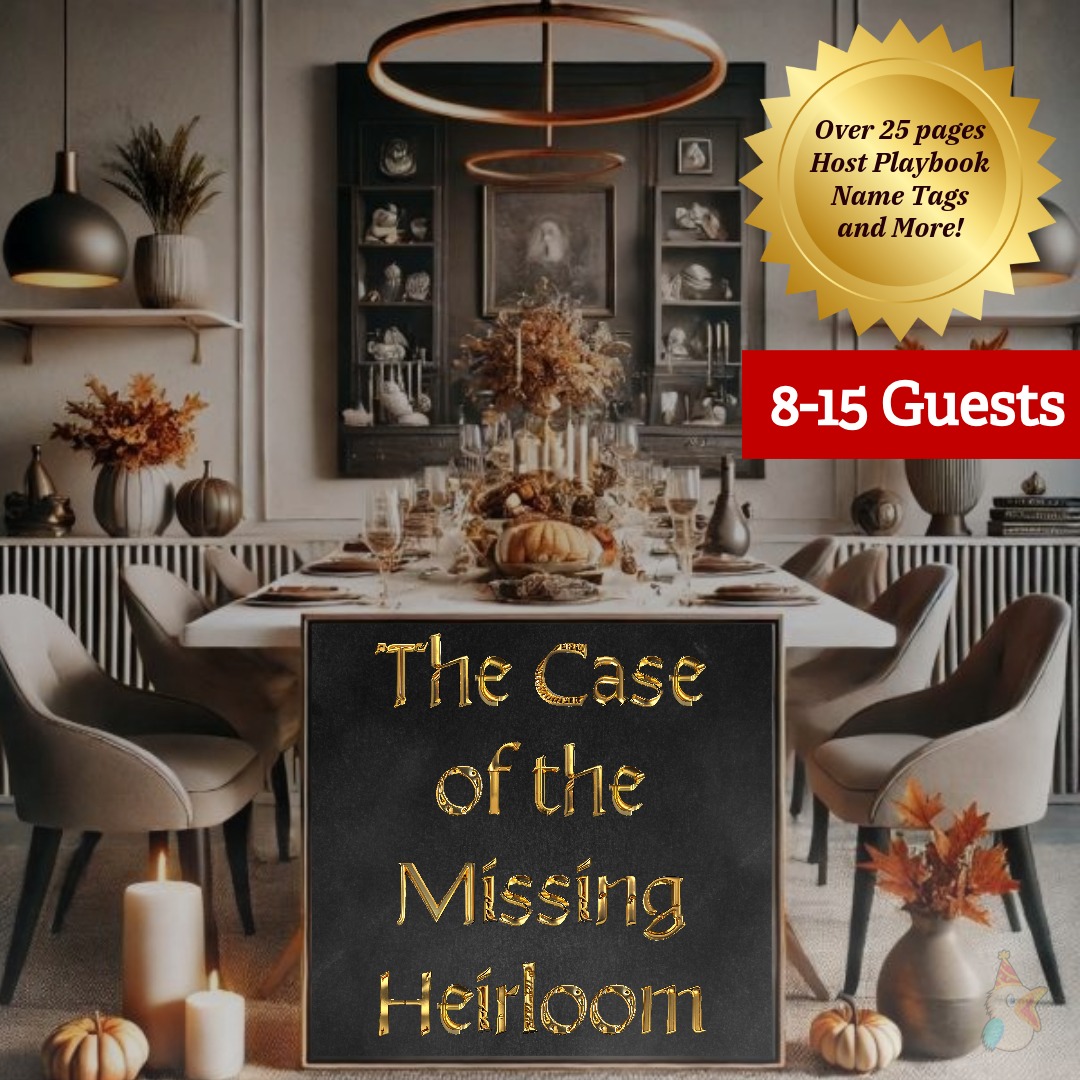
The Case of the Missing Heirloom Mystery Party Game Kit
Most HR-Friendly

The Case of the Missing Heirloom

Up to 15 players · $29

A family heirloom disappears at a cozy gathering. No violence, nothing uncomfortable — collaborative deduction at a relaxed pace. Ideal for teams with mixed comfort levels or first-timers.

View Missing Heirloom →
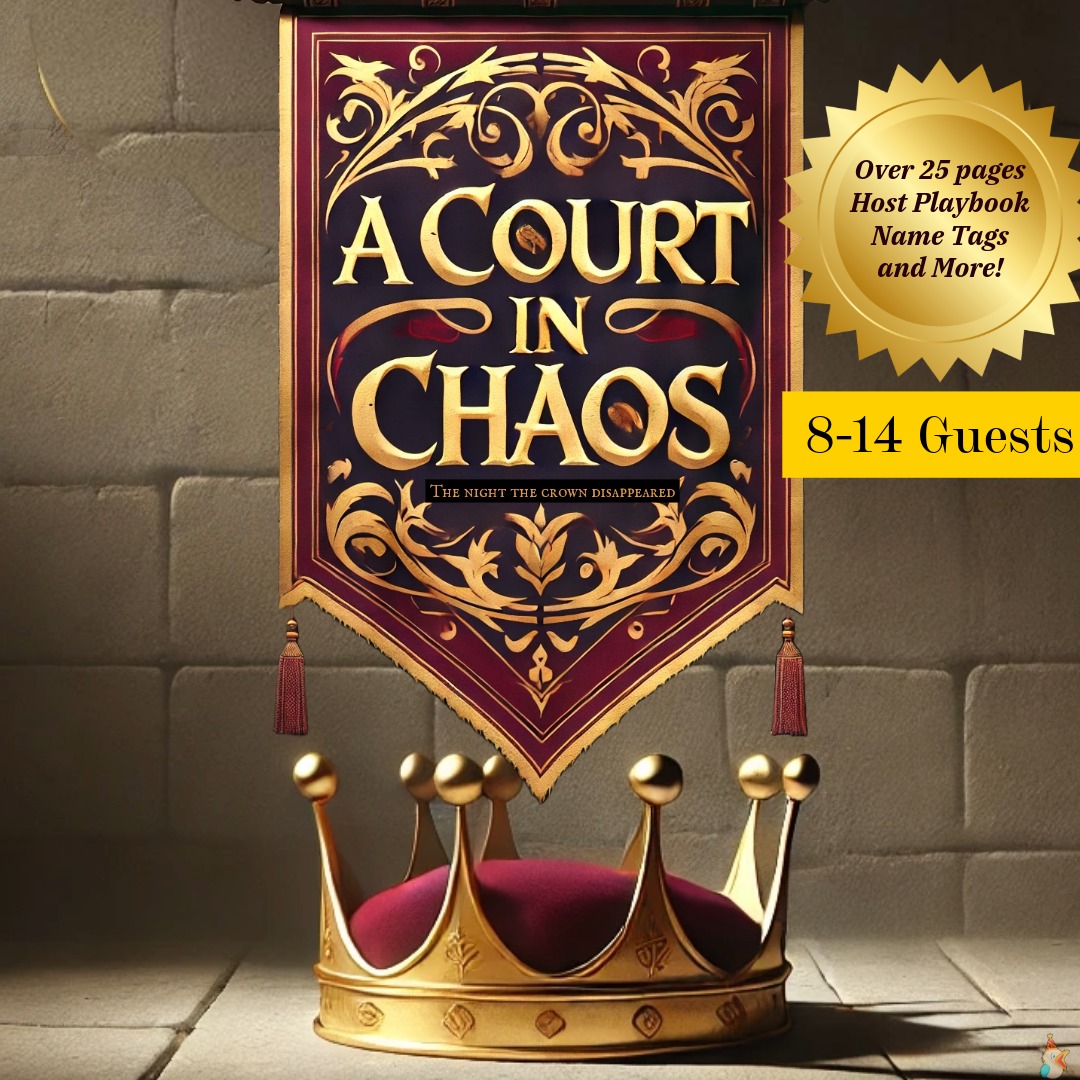
A Court in Chaos Medieval Fantasy Mystery Party Game Kit
Best for Fantasy & Themed Events

A Court in Chaos

8–14 players · Ages 16+ · $24

A medieval fantasy mystery in Stormbrow Hall. Nobles, knights, and enchanters gather when the Crown goes missing. Great for teams that want something beyond a standard holiday theme.

View A Court in Chaos →

Not Sure Which One?

Browse the full PartyKook collection — all kits are print-ready and include a complete host guide.

Merry & Bright — Holiday Heist Missing Heirloom — Cozy & Gentle A Court in Chaos — Fantasy Theme

Pair Your Game with These Supporting Activities

  • 5–10 min (icebreaker or intermission filler): Office Bingo, Caption Contest, Emoji Charades, Cocoa Relay
  • 10–20 min (between rounds): Company Trivia, Gingerbread Engineering, Photo Scavenger Hunt
  • All evening (ambient): Kindness Tree, Puzzle Corner

Corporate Office Party Themes That Photograph Well

A theme gives people a dress code anchor and makes the photos look intentional. You don’t need a major decoration budget for this. Twinkle lights, a consistent color palette, and one statement piece (a backdrop, a cocoa bar, a branch with leaf cards) are usually enough.

  • Gala at Snowhaven: White and gold decor, business-festive dress. Pair with Merry & Bright’s Holiday Heist. The room looks like an actual event in photos.
  • The Heirloom Hunt: Sweaters, candles, tea bar, warm textures. Pair with The Case of the Missing Heirloom. Draws in people who normally skip office parties.
  • A Night at Stormbrow Hall: Medieval fantasy decor, rich jewel tones. Pair with A Court in Chaos. Great for teams that want something completely different from a standard holiday party.
  • Year-in-Review Gala: Any PartyKook mystery game, plus a 10-minute awards segment built around the year’s real highlights and inside references.
  • Holiday Around the World: Multiple winter celebrations represented in decor, food, and trivia. Particularly good for diverse teams.
  • Cozy Bookshop Night: Fairy lights, books, tea, sweaters. Pair with Missing Heirloom for a perfectly cozy fit.
  • Retro Throwback: Decade-specific music, props, and snack choices. Any PartyKook game runs exactly as it normally would — the theme layers on without extra planning.
On language

Use whatever feels natural for your team — “holiday,” “winter,” “Christmas,” or some mix. The goal is a room where everyone feels welcome, not a vocabulary policy.


Corporate Office Party Budget: What Each Tier Actually Gets You

The most reliable way to overspend on an office party is to put money in the wrong place. Decor makes the room look good in photos. The activity is what people remember. If you have to choose, spend on the activity first.

Here’s how costs typically break down for a group of 15 people.

Tier Cost per Person What It Covers Best For
Lean $10–$15 Printed mystery game, grocery-run snacks, paper goods, one statement decoration like twinkle lights Small teams, tight budgets, or groups where the activity matters more than the presentation
Mid-Range $20–$35 Mystery game kit, catered or delivered snacks and drinks, coordinated paper goods, printed signage, small award prizes Most corporate teams — this is where the effort-to-satisfaction ratio is best
Full Experience $40–$60 Mystery game kit, full catering, beverage station, photo backdrop, statement decor, meaningful prize gifts, professionally printed materials End-of-year celebrations, client-facing teams, events that double as a company showcase
Where to invest if you’re choosing

Activity over decor. Food over swag. Printed materials over digital ones — physical things on tables create a different kind of engagement than a screen does. A good activity at a lean budget beats a beautiful room with nothing to do in it.


How to Plan a Corporate Office Party: Step-by-Step

This is the sequence that works for most teams of 10–20. A committee of two or three people can get through it without it becoming a second job — as long as ownership is clear from the start.

3 Weeks Out

  • Choose a date and book the room (conference room or break area with four tables)
  • Pick a theme and your anchor activity
  • Assign committee roles with clear ownership — diffuse responsibility is how things fall through the cracks
  • Send the initial invite: date, time, location, dress code, and a brief agenda preview
  • Decide what you want to measure: attendance rate, participation rate, satisfaction score

2 Weeks Out

  • Buy the mystery game kit and print one test page to check quality
  • Confirm food and drink orders; make sure there are options for dietary restrictions
  • Order supplies: cups, plates, markers, tape, lights, backdrop
  • Draft the team roster — mix departments into groups of 3–5, separate managers where you can
  • Read through the host guide and confirm who is running as MC

48–72 Hours Out

  • Print all character sheets, clue envelopes for both rounds, table tents, and any signage
  • Email or Slack-DM character briefs to each guest with one optional flair idea
  • Include a swap offer in every brief — no explanation needed or requested
  • Send a final reminder: agenda, dress code, what to bring (nothing — it’s all there)
  • Build run-cards for the MC, Logistics Lead, and Program Lead

Day Before

  • Pack table kits: Round 1 envelopes on tables, Round 2 at the host station
  • Set up decor and test music at low volume
  • Prepare three mini-awards: Best Sleuth, Best Teamwork, Best Spirit
  • Confirm all allergen labels are printed and attached to every food item

Day Of — Arrive 30–45 Minutes Early

  • Set signage, the drinks station, welcome table, and photo backdrop
  • Put name stickers, pens, and sticky notes at each table
  • MC follows the opening script; Logistics Lead runs the visible timer
  • Get the group photo before or immediately after the reveal

Day After

  • Post 3–5 photos (with consent) along with the winners and a thank-you
  • Send a 3-question pulse survey — within 24 hours gets you the best response rate
  • Log attendance rate, participation rate, and average time on site

2–3 Hour Corporate Office Party Run-of-Show

Three versions below. Same core structure, different lengths. Use the standard as your starting point and adjust from there.

Standard (2.5 Hours)

Time Segment Leads Type
0:00–0:20 Welcome mingle — warm drinks, name stickers, optional photo backdrop Logistics Social
0:20–0:35 Icebreaker — Office Bingo or Caption Contest MC Social
0:35–1:15 Mystery Round 1 — Read roles, trade clues, team notes MC Mystery
1:15–1:35 Intermission — Snacks, cocoa bar, photo moment, Kindness Tree Logistics Break
1:35–2:15 Mystery Round 2 — New clues, timeline building, final theory submission MC Mystery
2:15–2:30 Reveal + Awards + Group Photo — Best Sleuth, Teamwork, Spirit MC Wrap
Adjusting the length

2-hour version: Icebreaker 10 min, each mystery round 30 min, intermission 10 min, reveal 10 min.
3-hour version: Extend intermission to 25 min and add one mini-game (trivia or gingerbread) before the reveal. Add 10 minutes for teams to share their final theories before submitting.

MC Opening Script (5 Minutes)

  1. Welcome: “Tonight’s goal is simple — connect, have fun, and solve a mystery together.”
  2. Teams: “You’re in mixed-department teams of 3–5. Your team name is on the table card.”
  3. How to play: “Each round: read your character card, share the key information on it with your table, and take notes as a team.”
  4. Timing: “Two rounds with a break in the middle. When I call time, wrap up your thought — don’t start a new one.”
  5. Comfort: “Speaking is encouraged, not required. Breaks are welcome. Warm drinks are up front. Alcohol comes out after Round 1 if you want it.”
  6. Start: “Round 1 envelopes are on your tables. Your timer starts now.”

Ready to Run Your Party?

All three mystery games are print-ready, include a full host guide, and are built for a conference room — 2–3 hours, no acting required.

Merry & Bright — Holiday Heist Missing Heirloom — Cozy & Gentle A Court in Chaos — Fantasy Theme

Office Party Planning Committee Roles

You need 3–4 people with clear ownership, not a large group where everyone is loosely responsible for everything. Assign these the same day you book the room. Roles can double up for smaller committees — just make sure every area has a name attached to it.

Chair / Producer

Owns the timeline, budget decisions, and final calls. One person only — shared ownership is how things get missed.

Program Lead

Selects and purchases the mystery game, writes the run-of-show, and owns the activity schedule on the day.

Logistics Lead

Room layout, printables, decor, A/V, supplies, table setup. Runs the visible timer during the event.

Comms Lead

Invite, reminders, character brief emails, internal posts, photo permissions, and the next-day recap.

Budget Lead

Purchases, vendor relationships, reimbursements, food and drink orders. Can combine with Chair for smaller events.

Host / MC

Welcomes guests, delivers the 5-minute opening, calls time on rounds, announces awards. The MC’s energy sets the tone for the whole evening.

Inclusion Lead

Dietary labels, accessible seating, quiet corner availability, photo consent, alcohol-is-optional messaging.

Photo Lead

Photo backdrop setup, candid shots during rounds, group photo at the reveal, post-event recap with consent-cleared images.

Supplies Checklist

  • PartyKook mystery game kit: host guide, character sheets, Round 1 and Round 2 clues
  • Table tents, name sticker sheets, markers, pens, sticky notes
  • Tape, scissors, clipboards if useful
  • Cups, napkins, plates, trash bags
  • Hot cocoa, cider, herbal tea, sparkling water
  • Savory snacks: veggie cups, mini quiches, pretzel bites, cheese and crackers
  • Sweet snacks: cookie sampler, brownie bites, seasonal fruit
  • Allergen labels for every food item
  • Photo backdrop plus one statement decoration (twinkle lights work well)
  • Three small award prizes: Best Sleuth, Best Teamwork, Best Spirit
  • Visible timer — a tablet or countdown clock, not just a phone people can’t see

Office Party Food, Drinks & Inclusivity

What to Serve and When

Lead with the hot drinks. Get cocoa, cider, or tea into people’s hands when they walk in — it gives early arrivals something to do and sets a warm tone before anything else starts. Save alcohol for after Round 1 if you serve it at all.

Parties that open with a bar tend to have a narrower participation range and shorter average stay. More practically: a cold, awkward room doesn’t warm up because of what’s in people’s glasses. It warms up because there’s something happening.

  • Open with: hot cocoa bar, mulled cider, herbal teas, sparkling water with citrus or berries
  • Savory: veggie cups with dip, mini quiches, pretzel bites, cheese and crackers
  • Sweet: cookie sampler, brownie bites, seasonal fruit platter
  • Labels: mark gluten-containing, dairy, tree nut, and vegan items on every platter
  • Alcohol: optional, light, and introduced only after Round 1 ends

Inclusivity Checklist

  • Use whatever language — “holiday,” “winter,” “Christmas” — fits your team naturally
  • Invite specifies dress code, agenda, dietary process, and confirms alcohol is optional
  • A quiet spot available throughout the event for anyone who needs a break
  • Accessible seating and clear pathways through the room
  • Photos taken with consent; group photo opt-out respected without comment
  • Start and end on time — people have caregiving responsibilities and commutes
  • Costume flair is always optional; never remarked upon if someone skips it
  • Role swaps available to anyone at any point, no explanation required

What to Measure After a Corporate Office Party

Three weeks of planning deserves more than a gut feeling about how it went. These five numbers tell you what worked and give you something concrete to bring to next year’s budget conversation.

MetricHow to MeasureTarget
Attendance rate Attended ÷ Invited 75% or higher
Participation rate Stayed for full event ÷ Attended 85% or higher
Time on site Average minutes from arrival to departure 120–170 minutes
Satisfaction score 3-question pulse survey sent next morning 4.5 out of 5
New connections Percentage who report meeting someone from a different department 70% or higher

Everything You Need Is Here

Pick a theme. Choose a mystery game. Send the character briefs. Follow the schedule. Your team handles the rest.

Merry & Bright — Holiday Heist Missing Heirloom — Cozy & Gentle A Court in Chaos — Fantasy Theme

Corporate Office Party Ideas: Frequently Asked Questions

  • What are the best corporate office party ideas?

    PartyKook mystery games are the best anchor activity for groups of 10–20. They give everyone a role, create a shared goal, and have a satisfying reveal at the end. Choose from Merry & Bright’s Holiday Heist for a festive whodunit, The Case of the Missing Heirloom for a gentler non-murder format, or A Court in Chaos for a fantasy-themed event. Around the game, add a quick icebreaker to open, a snack break in the middle, and mini-awards to close.

  • How do you plan a corporate office party step by step?

    Book the room 3 weeks out. Pick your anchor activity. Build mixed-department teams of 3–5. Send character cards 48–72 hours before with a swap offer included. Arrange food with allergen labels. Run the event against a written schedule with an MC, a Logistics Lead, and visible timers. The next day: send a short survey and post photos.

    The step most planning committees skip is the character brief. Send it early. It makes a bigger difference than most people expect.

  • What games work best for a corporate office party?

    A PartyKook mystery game is the best anchor activity for a corporate office party. It’s team-based, time-boxed, and nobody has to perform alone in front of the room. For the icebreaker slot: office bingo and caption contests work well. For the intermission: company trivia or gingerbread engineering. The PartyKook game carries the night — the rest just fills the gaps.

    Avoid anything where one person is the center of attention. People anticipate those games with dread, not excitement, even if they don’t say so.

  • How long should a corporate office party be?

    Two to three hours. Long enough for real connection, short enough that people don’t feel stuck. A standard 2.5-hour structure: 20-minute welcome and icebreaker, 40-minute Round 1, 20-minute intermission, 40-minute Round 2, 15-minute reveal and awards.

    Starting and ending on time matters more than most planning committees realize. A lot of people on your list have somewhere to be afterward. Respecting that makes them more likely to come in the first place.

  • How do you make an office party not awkward?

    Open with something structured — bingo, a caption contest, anything with a clear goal — instead of open mingle. Use small teams of 3–5 with assigned roles so one voice doesn’t end up carrying everyone else. Keep the rules explanation to 5 minutes or under. Avoid games where someone performs alone. And send character cards out 48–72 hours ahead so no one walks in cold.

    That last one does more than anything else. People who know their role before they arrive are far less likely to find reasons to leave early.

  • How much does a corporate office party cost per person?

    Roughly $10–$60 per person depending on how much you want to invest. A lean version with a printed game and grocery-run snacks can come in around $10–$15 per person and still work well. The mid-range tier ($20–$35) covers a game kit, catered snacks, and small award prizes — that’s where the effort-to-satisfaction ratio is best. The full experience ($40–$60) adds full catering, a photo backdrop, and meaningful prize gifts.

    The common mistake is over-investing in decor and under-investing in the activity. A great activity in a plain room beats a beautiful room with nothing to do in it every time.

  • Should we assign characters ahead of time for a mystery game?

    Yes. Send character briefs 48–72 hours before via email or Slack DM. Keep it short: 2–4 sentences about the character, one optional flair idea, and a note that swaps are available anytime with no explanation needed.

    People who know their role before they show up are more relaxed, participate more, and make the room work better for everyone. It’s the change that has the biggest impact for the least effort.

  • Is alcohol necessary at a corporate office party?

    No. And making alcohol the social centerpiece is one of the most common planning mistakes. Start with hot cocoa, cider, tea — get something warm in people’s hands when they arrive. If you serve alcohol at all, bring it out after Round 1 ends and keep it secondary.

    The room doesn’t warm up because of what’s in the glasses. It warms up because there’s a good activity. Alcohol as a plan A signals that the activity isn’t carrying its weight.

Fun Corporate Team Building Party Ideas That Your Team Will Actually Love (2026)

Fun Corporate Team Building Party Ideas That Your Team Will Actually Love (2026)
Updated for 2026

Fun Corporate Team Building Party Ideas That Your Team Will Actually Love

No trust falls. No forced icebreakers. The activities, planning strategies, and expert guidance that create real team connection and real results.

Browse Team Building Games

5-Star Rated Games

Average across all mystery party titles

Hundreds of Teams Hosted

Trusted for offices, events, and parties

Print and Play in Minutes

No facilitator or special equipment needed

7-Day Customer Support

Help whenever you need it

Why Fun Corporate Team Building Ideas Actually Matter

Effective team building is one of the most tangible investments an organization can make. When people connect genuinely outside their daily roles, the benefits appear where it counts most.

Boosts Team Morale

Shared laughter and a change of scenery cut through workplace stress in ways that wellness emails simply cannot. People return to their work with more energy and a noticeably better attitude.

Improves Communication

Well-designed team activities create conditions for genuine listening and honest conversation. These habits transfer directly to daily meetings, project handoffs, and cross-functional collaboration.

Sparks Creative Thinking

When people step outside their routines and engage a different part of their brain, creative problem-solving follows. Some of the most useful workplace ideas emerge in relaxed, social settings.

Builds Genuine Bonds

People work better with colleagues they actually know. Shared experiences produce the kind of trust and rapport that incidental small talk at the coffee machine never quite generates on its own.

Counters Burnout

Consistent moments of genuine fun break up the grind and signal to your team that the organization values them as people. That signal matters enormously over the course of a career.

Improves Retention

Employees who feel genuinely connected to their team leave far less often. Team building is not a perk. It is a retention strategy with a measurable return on investment.

The Top Choice: Murder Mystery Parties

When you evaluate team building activities against criteria that actually matter, including participation rates, genuine connection, skill transfer, and lasting memory, murder mystery parties consistently outperform the alternatives.

Every person has a defined role. Unlike activities where quieter employees disappear into the background, murder mystery games assign every participant a character with a clear purpose. The reserved analyst might hold the objective that cracks the case open. The newest hire might be the one who connects all the pieces. No one is simply an observer.

Interaction is built into the structure. Rather than hunting for clues, every player in a PartyKook game is given a set of personal objectives that require them to seek out and talk to specific characters throughout the event. The game is only solvable through mingling. That is not a side effect of the format — it is the entire mechanism. Genuine conversation between colleagues is the product, and the mystery is the vehicle that makes it happen naturally.

Workplace hierarchy fades into the background. When a senior manager is playing a suspicious butler and an intern is playing the lead detective, titles lose their weight. People experience each other as complete, interesting individuals rather than job functions. That shift in perspective carries back into the workplace in concrete ways.

Teams practice real skills in a low-stakes environment. Analyzing evidence, forming hypotheses, communicating findings to the group, and revising positions when new information arrives. These are the same cognitive and collaborative skills your team uses on every project, presented in a format that makes practicing them genuinely enjoyable.

The memories stick. A year from now, no one will remember the trust fall exercise or the keynote speaker. But they will remember the moment someone confidently accused the wrong colleague, the dramatic reveal at the end, and how much they laughed. Shared stories are the foundation of team culture, and a well-run murder mystery generates them in a single afternoon.

I really appreciate how easy the set-up is for this game and how fun the characters are. Well done.
Kate, who hosted A Court in Chaos

PartyKook’s printable kits are designed with exactly this outcome in mind. Every game includes character sheets, host instructions, personal objectives, and name tags. Setup takes roughly fifteen minutes. No event planning experience is required, and no external facilitator is needed.

The Three Best PartyKook Games for Corporate Team Building

Each game is professionally written, office-appropriate, and designed to run without a hitch. Pick the theme that fits your team’s personality and your event’s tone.

Merry and Bright Holiday Heist Murder Mystery Game Kit
Holiday Favourite

Merry & Bright’s Holiday Heist

Someone has stolen the holiday spirit, and your team has to find out who. Built for office holiday parties and end-of-year events, this festive mystery keeps everyone moving and talking with memorable characters and genuinely surprising twists.

Best for: Holiday parties, year-end celebrations, seasonal office events

Get This Game
The Case of the Missing Heirloom Mystery Dinner Party Game
Classic Whodunnit

The Case of the Missing Heirloom

Set in a grand manor with suspicious family members and buried secrets, this game suits teams that appreciate sophisticated storytelling and careful deduction. Ideal for dinner party formats, client-facing events, and teams who enjoy a more deliberate pace.

Best for: Formal dinners, client entertaining, teams who enjoy classic mystery storytelling

Get This Game
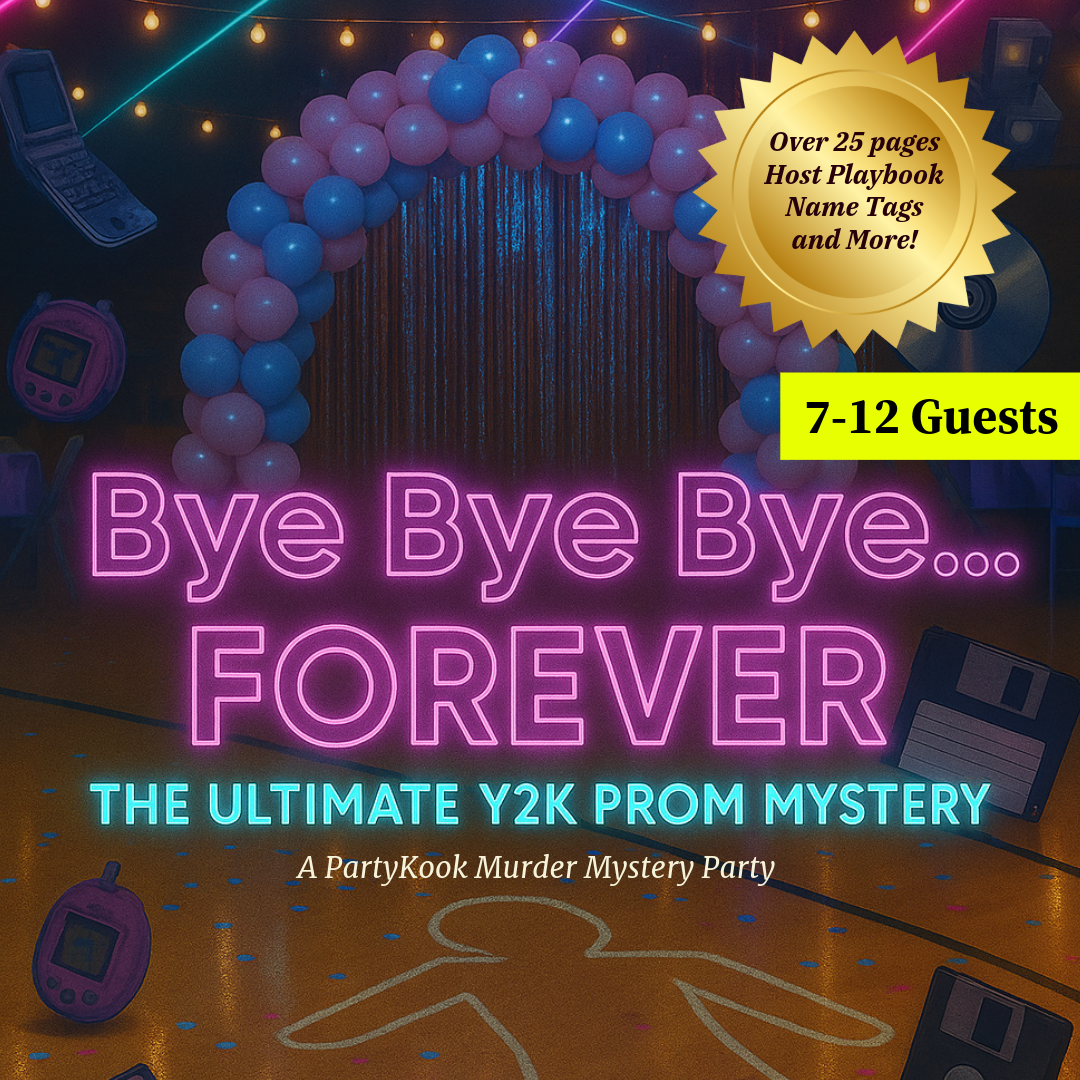
Y2K Prom Murder Mystery Game Kit Bye Bye Bye Forever
Best for Laughs

Bye Bye Bye… Forever! Y2K Prom Mystery

Boy-band drama, pop-star rivalries, and the full weight of early 2000s nostalgia converge at a fictional prom where someone has committed a very dramatic crime. Light, funny, and genuinely entertaining without sacrificing the collaborative structure that makes these events effective.

Best for: Casual Fridays, millennial teams, events where comedy is the priority

Get This Game

Not Sure Which Game Fits Your Team?

Browse the full collection to find the right match for your group size, event tone, and budget.

See All Team Building Games Browse All Adult Mysteries

More Fun Corporate Team Building Ideas Worth Considering

Murder mystery parties remain the most fully-realized option, but these activities work well as warm-ups, standalone events for shorter time slots, or alongside a mystery as part of a longer program.

01

Find-Your-Match Icebreakers

Printable mixer cards get the room moving immediately. Each person receives a card and must find their match by circulating and talking to colleagues. The structure removes the awkwardness of open-ended mingling and works well as a lead-in to a longer event.

02

Office Trivia Competition

Custom trivia rounds built around your company’s history, industry knowledge, or shared pop culture references are consistently well-received. Split into teams, keep a visible scoreboard, and offer a modest prize. Simple to organize and easy to adapt for any group size.

03

Team Potluck Challenge

Themed potluck events, where teams plan and prepare dishes together in advance, add a layer of collaboration that begins before the event itself. A judging component or structured tasting format gives the gathering a clear focus and a memorable conclusion.

04

Escape Room Puzzles

Setting up problem-solving stations around your office is a cost-effective way to create an escape room experience in a familiar space. Incorporating company-specific references and department knowledge makes the format feel personal rather than generic.

05

Creative Workshop

Hands-on sessions, whether painting, pottery, or cooking, reliably lower people’s guards and open conversations that would never happen across a conference table. The shared experience of attempting something unfamiliar creates a useful sense of equality across the group.

06

Community Volunteer Day

Working toward a cause that exists beyond the organization creates a distinct quality of team bond. Coordinated volunteer activities consistently produce high engagement and genuine post-event connection among participants.

Looking for the Option That Delivers Every Time?

PartyKook’s murder mystery games outperform every alternative on participation, engagement, and the connections they create.

See Team Building Games

How PartyKook Compares to Other Team Building Options

Most team building options fail on at least one critical dimension. Here is how the most common alternatives actually stack up.

Activity Total Cost Full Participation Creates Lasting Memory Easy to Organize
PartyKook Mystery Games Under $100 for the whole team Yes — every player has an active role Yes — stories that last for months Yes — print and play
Professional Facilitator $2,000 to $5,000 or more Usually Rarely — often feels corporate No — complex to coordinate
Escape Room Venue $25 to $40 per person Inconsistent — some participants observe Sometimes No — limited group capacity
Trust Falls and Workshops Free to $500 No — mostly passive No — forgotten within days Yes
After-Work Happy Hour $20 to $50 per person No — excludes non-drinkers and quieter team members No — unstructured socializing Yes

Office-Friendly Decor, Food and Drink Ideas by Theme

The physical environment shapes how people feel at an event. The right decor signals that this is something different from a standard meeting. These ideas are practical, budget-conscious, and entirely appropriate for a professional setting.

Decor
  • Warm fairy lights arranged across the ceiling or walls
  • A wrapped gift box as the central “stolen item” prop
  • Name tags printed on ornament-shaped card stock
  • Deep red and gold tablecloths or fabric runners
  • Santa hats or elf ears available as optional accessories at the entrance
Food
  • Peppermint brownies and frosted sugar cookies on a tiered stand
  • Mini quiches, stuffed mushrooms, and cranberry brie bites
  • A grazing board with seasonal fruit, soft cheeses, and salted nuts
  • Individual gingerbread house kits as an optional pre-game activity
Drinks
  • Sparkling cranberry punch as the main non-alcoholic centerpiece
  • Spiced apple cider served warm or over ice
  • A peppermint hot chocolate station with toppings
  • Festive mocktails using cranberry, lime, and rosemary garnish
Atmosphere
  • A jazz holiday playlist at low volume throughout the event
  • Supplemental warm lighting from lamps or fairy lights where the room allows
  • A small award for the detective who solves the case
  • Send character assignments in advance with a specific festive costume suggestion
Decor
  • Dark tablecloths with LED pillar candles as centerpieces
  • Printed family portrait frames arranged along one wall
  • A locked wooden box displayed as the missing heirloom prop
  • Vintage-style printed name placards at each seat
  • A few magnifying glass props placed around the room
Food
  • A three-course dinner format pairs well with this game’s deliberate pacing
  • Finger sandwiches, warm scones, and clotted cream for a high-tea feel
  • A cheese board with crackers, grapes, and honeycomb
  • Chocolate mousse or individual tiramisu cups as dessert
Drinks
  • Sparkling water with cucumber, lemon, and fresh herb garnish
  • A tea service with Earl Grey and Darjeeling
  • Elderflower cordial served in champagne flutes
  • Lemonade in a vintage-style beverage dispenser
Atmosphere
  • Classical strings or chamber music at low volume throughout
  • Suggest a smart-casual or old-money dress code in the invitation
  • Dim the overhead lights and supplement with warm lamps or LED candles
  • A printed manor house backdrop for photos is a memorable addition
Decor
  • Holographic and iridescent streamers hung in clusters
  • Repurposed CDs hung as makeshift mirror balls for a low-budget disco effect
  • Printed early-2000s magazine covers framed as wall art
  • Butterfly clips and jelly bracelets as party favors at the entrance
  • A prom night banner styled in early 2000s graphic aesthetics
Food
  • Pizza rolls, bagel bites, and mini corn dogs arranged on trays
  • A Lunchables-inspired charcuterie board for maximum nostalgia
  • Frosted sugar cookies decorated to reference early 2000s pop icons
  • Cosmic Brownies and other recognizable snacks from that era
Drinks
  • A bright pink or electric blue mocktail punch bowl as the centerpiece
  • Capri Sun pouches in a bin of ice for immediate nostalgia
  • Sparkling lemonade rimmed with colored sugar
  • Classic fruit punch with a sherbet float for the full prom experience
Atmosphere
  • An early 2000s pop playlist with full commitment to the era
  • Encourage accessories rather than full costumes: low pigtails, trucker hats, chunky footwear
  • Set up a prom photo booth corner with era-appropriate props
  • Run a best-dressed contest with a candy prize to maintain energy throughout

How to Plan a Fun Corporate Team Building Event That Actually Works

The difference between an event people talk about for months and one people quietly resent almost always comes down to preparation. Work through these nine steps and you will be in excellent shape.

  • 1

    Define What You Want to Achieve

    Are you integrating new hires, bridging a gap between departments, celebrating a milestone, or simply giving a tired team a genuine break? Your answer shapes every decision that follows, from which game to choose to how long the event should run.

  • 2

    Take Your Team’s Personality Seriously

    A highly competitive group of extroverts will have a different ideal experience than a team of detail-oriented introverts. Consider how your team interacts day to day, what humor lands well, and where the comfort zone sits. The best activities stretch that zone slightly without ignoring it entirely.

  • 3

    Set a Realistic Budget

    Exceptional team building does not require a large budget. A PartyKook game kit costs less than a round of lunch for the team and produces a significantly more durable outcome. Budget for the game, food and drinks, any optional decor, and a small prize for the winning detective.

  • 4

    Choose a Theme That Fits

    A well-chosen theme gives people explicit permission to be playful and fully engaged. It also provides a natural framework for decor, food, and dress. Whether you choose a festive holiday heist, a classic manor mystery, or Y2K nostalgia, the theme elevates the entire event.

  • 5

    Select the Right Venue

    PartyKook games work in conference rooms, break rooms, private dining rooms, outdoor pavilions, and most open-plan office spaces. The key requirement is enough room for small groups to form and move around freely. No special setup or equipment is required beyond what comes in the kit.

  • 6

    Write an Invitation Worth Opening

    Send character assignments in advance, include a brief teaser about the scenario, and add a specific costume suggestion tied to the theme. An invitation that generates genuine curiosity creates anticipation that carries into the room on the day. Aim to send it two to three weeks out.

  • 7

    Plan Food and Drinks Thoughtfully

    Use the theme-matched suggestions in the section above. Account for dietary restrictions and ensure that non-alcoholic options are as prominent as anything else on offer. Food that fits the theme reinforces the atmosphere and gives people something to talk about beyond the mystery itself.

  • 8

    Host With Genuine Energy

    The organizer’s attitude sets the floor for everyone else’s participation. Welcome people warmly, explain the rules clearly, take photographs throughout, and play a role yourself. When leadership commits to the experience fully and visibly, the rest of the group follows without hesitation.

  • 9

    Collect Feedback Afterward

    A brief post-event survey with three or four questions gives you the data to improve next time and signals to the team that their experience matters to the organization. Ask what people enjoyed most, what they would change, and what format they would like to try at the next event.

Ready to Get Started?

Character sheets, personal objectives, host instructions, and name tags are all included in every printable kit. No prior experience required.

Shop Team Building Games

Team Building Mistakes That Undermine the Whole Event

Even well-intentioned organizers repeat the same avoidable errors. Understanding what goes wrong is half the battle in planning something that actually works.

  • 1

    Coercing Participation

    Publicly pressuring employees to attend or calling out individuals who are not engaging at the desired level creates resentment rather than connection. The goal is an environment where joining feels like an obvious choice, not an obligation with social consequences attached.

  • 2

    Selecting Activities That Leave People Out

    Activities that require specific physical abilities, fluency in particular cultural references, or a high degree of extroverted energy exclude team members before the event has even started. The most effective activities meet people where they are and create equal footing across the group from the outset.

  • 3

    Defaulting to Tired Corporate Formats

    Trust falls, two-truths-and-a-lie, and workshop-style presentations produce low engagement because most people have experienced them before and found them underwhelming. Choose something your team would voluntarily attend on a weekend.

  • 4

    Designing Only for Extroverts

    Open-ended mingling formats place an enormous burden on introverted team members. PartyKook’s murder mystery format solves this directly. Every player arrives with a character assignment and a set of personal objectives that direct them toward specific conversations throughout the event. That structure gives quieter participants a purposeful reason to approach colleagues, removing the vague social pressure that makes unstructured mingling so uncomfortable.

  • 5

    Allowing Work to Colonize the Event

    Team building that slides back into project updates, performance discussions, or strategy debates stops being team building and becomes a meeting with better catering. The return on investment comes from genuine human connection. Protect that space deliberately.

  • 6

    Underinvesting in Logistics

    Unclear instructions, a cramped venue, or materials that are not prepared in advance derail the energy of an event before it finds its rhythm. PartyKook kits reduce this risk significantly. Setup takes fifteen minutes and every necessary element is included in the download.

Your Questions About Fun Corporate Team Building Answered

Practical answers to the questions HR managers, office managers, and team leads ask most often.

Murder mystery parties remain the most comprehensively effective option because they demand active participation from every person in the room rather than passive observation. PartyKook’s mingle-play format keeps people moving, talking, and genuinely engaged from start to finish. Other strong options include Find-Your-Match icebreaker games, structured trivia competitions, and themed potluck challenges, each of which works well as a standalone activity or as a warm-up to a longer event.
Yes. The skills a murder mystery requires, including collaborative analysis, active listening, information sharing, and adaptive reasoning under mild pressure, are the same skills that make workplace teams effective. The critical difference is that participants practice these skills in a context where they genuinely want to succeed, which produces a quality of engagement that no workshop or training session reliably replicates.
PartyKook’s games accommodate groups from 6 to 30 or more participants. Most titles are scalable, meaning character roles can be adjusted to fit your actual headcount without disrupting the story. Check the individual product pages for the specific player ranges associated with each game.
Three things: a PartyKook printable kit, a space where people can circulate and talk in small groups, and your team. The kit contains character sheets, personal objectives, a host guide, and name tags. Rather than hunting for clues, each player is given a set of objectives that require them to mingle, ask questions, and interact with specific characters throughout the event. That structure is what drives genuine team connection. Optional additions include themed decor, food, drinks, and a prize for the player who solves the case. There is no need for a professional facilitator or any prior event planning experience.
Most effective events run between 60 and 120 minutes. PartyKook murder mystery games typically last between 90 minutes and two and a half hours depending on group size and how much discussion you allow between rounds. Icebreaker formats like Find-Your-Match work well in 15 to 30 minutes and make a natural warm-up before a longer activity.
Choose an activity with a defined structure and clear individual roles. The reason PartyKook’s murder mystery format works so well for introverts is that it removes the undefined social pressure of open mingling and replaces it with a clear task. Each player receives a character assignment and a set of personal objectives that direct who to speak to and why. That structure gives quieter participants a purposeful, confident entry point into every interaction without requiring them to perform extraversion they do not naturally have.
PartyKook’s games are professionally written with layered storylines, well-developed characters, and content that is entirely appropriate for a workplace environment. Many HR managers and operations leads choose printable formats specifically because they are cost-effective, straightforward to organize, and deliver an experience that compares favorably to options costing many times more.
A single PartyKook game kit covers your entire team for under $100, making it the strongest value available in this category by a considerable margin. Other cost-effective options include office trivia competitions, team potluck events, Find-Your-Match icebreaker games, and DIY escape room challenges built from printed materials and office supplies. The common thread across all of them is structured interaction rather than passive entertainment.
Yes. Conference rooms, break rooms, open-plan areas, and common spaces all work well for PartyKook games. The only practical requirement is enough room for people to move between small groups and hold brief conversations without interference. No staging, theatrical props, or specialist equipment is needed. Print the materials, clear a reasonable amount of floor space, and the venue is ready.

Your Team Deserves a Real Event, Not Another Forgettable Workshop

Choose a PartyKook mystery, print it in under fifteen minutes, and give your team an afternoon they will genuinely talk about.

Your Cart

    Your cart is empty.
shopping-basket